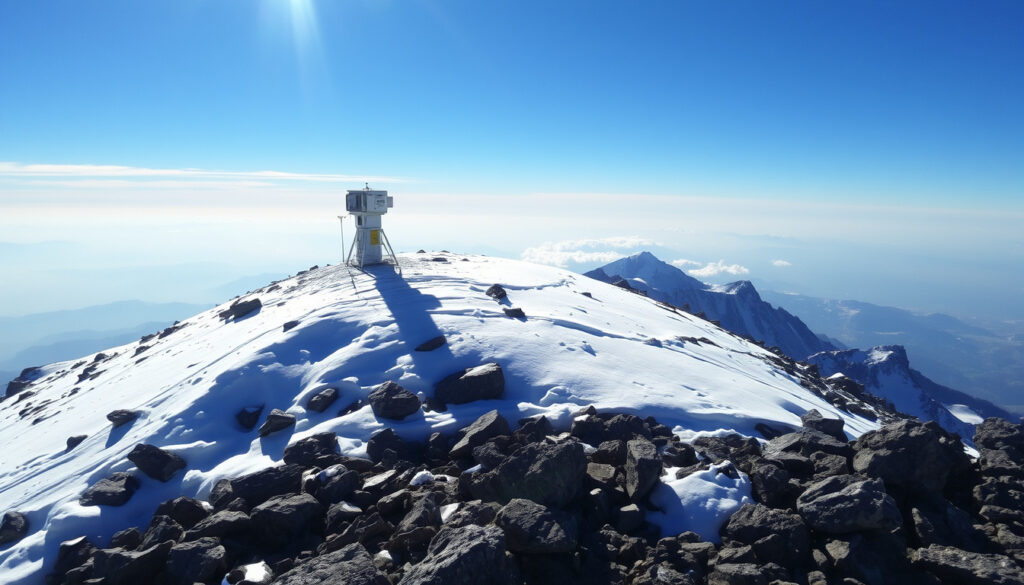
Pure Tūroa Snow Report: Live Conditions at 2,322 m
Anyone who has ever planned a ski day on Mt Ruapehu knows the morning ritual: refreshing the official snow report, waiting for that first confirmation of fresh snow or which lifts are spinning. The Pure Tūroa snow report, updated daily by ski patrol, delivers the ground truth at the summit elevation of 2,322 m — no model, no guesswork. This guide unpacks how that live report differs from long-range forecasts, how Tūroa stacks up against Whakapapa on the northern face, and what the data means for your next day on the mountain.
Peak elevation: 2,322 m (7,618 ft) · Vertical drop: 722 m (2,369 ft) · Lifts: 4 (1 gondola, 3 chairlifts) · Skiable terrain: 390 ha (964 acres) · Season (typical): Late June to October · Owner: Ruapehu Alpine Lifts (70% owned by NZ Government)
Quick snapshot
- Summit elevation 2,322 m (Wikipedia — ski field reference)
- Owner is Ruapehu Alpine Lifts, majority Crown-owned (NZ Government press release 2023)
- Official report published daily at pureturoa.nz/snow-report (Pure Tūroa official site)
- Exact snow depth on any future date — forecasts are modelled, not measured
- Precise opening date for 2026 winter season (early July is typical but not locked)
- 2005 — RAL takes over operations (Wikipedia — Tūroa history)
- 2020 — COVID-19 disrupts operations (Mt Ruapehu official site)
- 2023 — Crown becomes majority owner after restructuring (NZ Government press release 2023)
- 2025 season opening — check official report for real-time go-ahead
- July through September typically delivers peak snow cover
| Specification | Value |
|---|---|
| Summit elevation | 2,322 m |
| Vertical drop | 722 m |
| Skiable terrain | 390 ha |
| Number of lifts | 4 |
| Owner | Ruapehu Alpine Lifts (Crown majority) |
| Typical season | Late June to October |
What Is the Pure Tūroa Snow Report and How Is It Different from a Forecast?
Source of the official report
The Pure Tūroa snow report is produced each day by ski patrol staff who physically assess snow depth, surface condition, and lift status on the mountain. That live data is published at pureturoa.nz/snow-report — the only source that reflects actual ground conditions rather than modelled predictions.
Ski patrol measures what is actually on the ground. Forecast models estimate what might fall. The gap between them can be the difference between a powder day and a rain event.
Differences between live report and long-range prediction
MetService (New Zealand’s official weather authority) publishes separate ski-field guidance for Tūroa, including a regional forecast for Tongariro National Park, ski field guidance, and a spot forecast. It explicitly warns that forecasts may be updated at any time and users should always check the site for the latest information. Third-party services like Snow-Forecast (global resort forecast provider) add another layer of modelled data. The official report, conversely, tells you what is happening right now — not what a computer model thinks will happen.
The implication for trip planning: use forecasts. For deciding whether to load your gear at 6 AM, use the Pure Tūroa snow report.
How High Is Tūroa Ski Field?
Elevation details
Tūroa’s summit sits at 2,322 m, which makes it the highest lift-served point on Mt Ruapehu. The vertical drop is 722 m, with the base elevation roughly at 1,600 m (Wikipedia — ski field reference). That elevation range is critical for snow quality: the upper mountain holds snow well into late spring, while the lower slopes can turn slushy on warm afternoons.
Snow quality variation by altitude
At 2,322 m, temperatures at the summit are consistently several degrees cooler than at the base. MetService’s spot forecast for Tūroa regularly shows snow falling above 1,600 m while rain hits lower elevations — a pattern that skiers on the southern slopes need to watch for when planning their day.
The pattern: upper mountain snow stays drier and more stable than lower mountain snow, especially in spring.
Who Owns Tūroa Ski Field?
Ownership structure
Ruapehu Alpine Lifts (RAL) operates both Tūroa and Whakapapa ski fields. After a financial restructure in 2023, the New Zealand Government (Crown) (national authority for public assets and ski-field operations) became the majority owner of RAL, holding roughly 70% control. The remaining stake is held by smaller shareholders.
Management company history
RAL took over operations of Tūroa in 2005 from the previous leaseholder. The COVID-19 pandemic in 2020 caused shortened seasons and financial strain that ultimately led to the 2023 government intervention. The Crown’s involvement since 2023 has provided operational stability for both fields.
What this means: Tūroa is effectively a public-backed asset, which gives skiers more certainty about long-term investment in lifts and snowmaking infrastructure.
What Is the Best Time to Go to Mt Ruapehu for Skiing?
Peak season months
The typical season runs from late June through October, with the most reliable snow cover from July through September. August is historically the peak snowfall month across the central North Island. MetService’s historical data and ski-field guidance consistently shows August delivering the highest average snow depths.
Crowd considerations
School holidays in July and October bring the biggest crowds to both fields. Skiers looking for shorter lift lines should aim for mid-week days in August or September — after the July holiday rush but before spring conditions soften the snow.
The trade-off: August gives the deepest snow but also the busiest weekends. September offers quieter slopes but variable spring conditions.
What Is Better, Whakapapa or Turoa?
Three stats, one pattern: Tūroa wins on altitude and vertical, Whakapapa wins on size and beginner terrain.
| Feature | Tūroa | Whakapapa |
|---|---|---|
| Summit elevation | 2,322 m | 2,300 m |
| Skiable terrain | 390 ha | 550 ha |
| Lifts | 4 (1 gondola, 3 chairlifts) | 5 (1 gondola, 4 chairlifts) |
| Exposure | Southern slopes — holds snow longer | Northern slopes — warmer, more spring skiing |
| Best for | Advanced and intermediate skiers | Beginners and families |
Terrain differences
Tūroa’s southern exposure means its snowpack tends to last longer into spring compared to Whakapapa’s northern slopes. Both fields sit on the same volcano, but their different aspects create distinct microclimates. Whakapapa’s official report page shows live conditions including top-of-knoll temperature, wind, and snow base values — at the time of reporting, the Top of Knoll T-bar base was 11 cm and the Top of Gondola base was 25 cm, with 0 cm of 24-hour snowfall and 10 cm over 7 days.
Lift systems
Whakapapa has one more lift than Tūroa, and its Rangatira Express is a high-speed quad that reduces wait times on busy days. Tūroa’s lift system includes a gondola that accesses the lower mountain, with chairlifts serving the upper terrain.
What this means: if you are an advanced skier chasing steep lines and late-season snow, Tūroa is your field. If you are teaching kids or prefer wide groomers, Whakapapa’s larger terrain network gives you more room to cruise.
What Is the Best Ski Resort in New Zealand?
Top contenders overview
New Zealand’s ski resort landscape includes a handful of major players: Treble Cone and The Remarkables near Queenstown, Coronet Peak in the same region, Mt Hutt near Christchurch, and the two Mt Ruapehu fields. Each has its own profile — Treble Cone leans advanced, The Remarkables are family-friendly, and Mt Hutt draws a loyal local crowd for its consistent snowmaking.
How Tūroa ranks
Tūroa ranks among the top New Zealand resorts for advanced terrain and snow quality at high elevation. Its 722 m vertical drop is the largest on the North Island and compares well against the South Island’s best. For skiers who prioritise sustained steep runs and cold snow, Tūroa sits near the top of the national list.
The catch: no other NZ resort offers the same combination of volcano skiing, southern-exposure snow retention, and direct government backing for operational stability.
How Does the Tūroa Snow Report Compare to European and Alpine Reports?
Tūroa vs Zell am See snow conditions
Zell am See operates in the Northern Hemisphere winter (December to April) while Tūroa runs from June to October. Direct snow comparisons are seasonal — when Tūroa is getting mid-winter snow in August, Zell am See is in summer. The Snow-Forecast model for Tūroa reports snow depth and forecast data that is comparable in format to any Alpine resort, but the actual conditions depend entirely on the Southern Hemisphere winter cycle.
Alpine snowiest resorts open right now
When Tūroa is open (June-October), the Alpine ski season in Europe is closed. Conversely, during the European winter (December-April), Tūroa is in its off-season. The snowiest Alps resorts — typically Cervinia or Val Thorens — benefit from high-altitude glaciers that extend their seasons, but they never overlap with Tūroa’s operating window.
Why this matters: for skiers who chase snow year-round, Tūroa offers a Southern Hemisphere winter that slots into the European summer break, creating a genuine counter-season option.
Timeline
- 2005 — Ruapehu Alpine Lifts takes over Tūroa operations (Wikipedia — Tūroa history)
- 2020 — COVID-19 pandemic forces shortened seasons (Mt Ruapehu official site)
- 2023 — Crown becomes majority owner of RAL after financial restructuring (NZ Government press release 2023)
- July 2025 — 2025 season opening (check official site for exact date)
Clarity check: what we know vs what we don’t
Confirmed facts
- Summit elevation 2,322 m — sourced from topographic maps and Wikipedia (ski field reference)
- Owner is Ruapehu Alpine Lifts, majority Crown-owned — NZ Government press release 2023
- Official report published daily at pureturoa.nz/snow-report
- Vertical drop of 722 m — consistent across official and third-party sources
- MetService publishes separate Tūroa and Whakapapa ski-field guidance pages
What’s unclear
- Exact snow depth on any future date — forecasts are modelled, not measured
- Precise opening date for 2026 winter season — only “early July” is stated
- Whether third-party forecast models will match actual conditions on a given day
What skiers are saying
“It’s looking like a cracker of a day up the maunga! Clear skies, a light easterly…”
— Pure Tūroa official snow report page, live condition update
“The Crown’s investment in Ruapehu Alpine Lifts secures the future of both Tūroa and Whakapapa for generations of skiers and snowboarders.”
— NZ Government press release, 2023
“MetService forecasts and warnings may be updated at any time. Users should always check the site for the latest information.”
— MetService ski-field guidance disclaimer
For skiers planning a trip to the North Island’s premier ski field, the distinction between the Pure Tūroa snow report and a forecast model is not academic — it determines whether you drive up the mountain or stay in town. The official report, updated daily by ski patrol, is the only source that tells you what is actually on the ground at 2,322 m. For anyone making the call at 6 AM, the choice is clear: trust the live report, use the forecast for next week, and check Whakapapa’s numbers only if you are deciding between the two sides of the volcano.
Related reading: Rain Arrival New Zealand Monday: Forecast & Warnings · South Island Heavy Rain: Warnings, Impacts, and Forecast
us.j2ski.com, skiresort.info, us.j2ski.com, snow-forecast.com, us.j2ski.com, onthesnow.com, onthesnow.com, facebook.com
Frequently asked questions
What does “pure turoa” refer to?
“Pure Tūroa” is the branding for the Tūroa ski field on Mt Ruapehu, New Zealand. It is used on the official website and snow report pages to distinguish the field from Whakapapa, the other ski field on the mountain.
Is the Pure Tūroa snow report updated daily?
Yes. Ski patrol updates the official report each day during the operating season, typically in the early morning. The report includes snow depth, surface conditions, open lifts, and weather observations.
Can I trust the official snow report over third-party forecasts?
For current conditions, yes — the official report measures actual snow on the ground. For future conditions, forecasts from MetService or snow-forecast.com are the appropriate tool. The two serve different purposes.
How does Tūroa snow quality compare to European resorts?
Tūroa operates in the Southern Hemisphere winter (June-October), opposite to European seasons. Snow quality at Tūroa’s summit elevation of 2,322 m is comparable to mid-altitude Alpine resorts, but with the advantage of southern-exposure snow retention.
What ski passes are valid at Tūroa?
Tūroa accepts Ruapehu Alpine Lifts passes, which are also valid at Whakapapa. Multi-day and season passes are available through the official Pure Tūroa website.
Does Tūroa have snowmaking?
Yes, Tūroa has snowmaking coverage on key trails to supplement natural snowfall, particularly on the lower mountain where temperatures are warmer.
Are there lodging options near Tūroa field?
Most visitors stay in Ohakune, the nearest town at the base of the mountain road, which offers motels, lodges, and holiday parks. There is no on-mountain accommodation at Tūroa itself.
More related posts
 Phivolcs Aftershocks Cebu Earthquake – Latest Updates and Key Facts
 Minister of Education NZ: Current Role, Contact & Ministers
 NZ Bird of the Year 2025: Kārearea Falcon Wins with 14,317 Votes
 Dame Karen Poutasi Cause of Death – Obituary and Legacy
 Best Dyson Vacuum Cleaner 2026: Top Models Compared & Reviewed
 Cast of Avatar: Fire and Ash: Full Cast List and Roles
 Hunting and Fishing Westgate: Store Location & Hours
