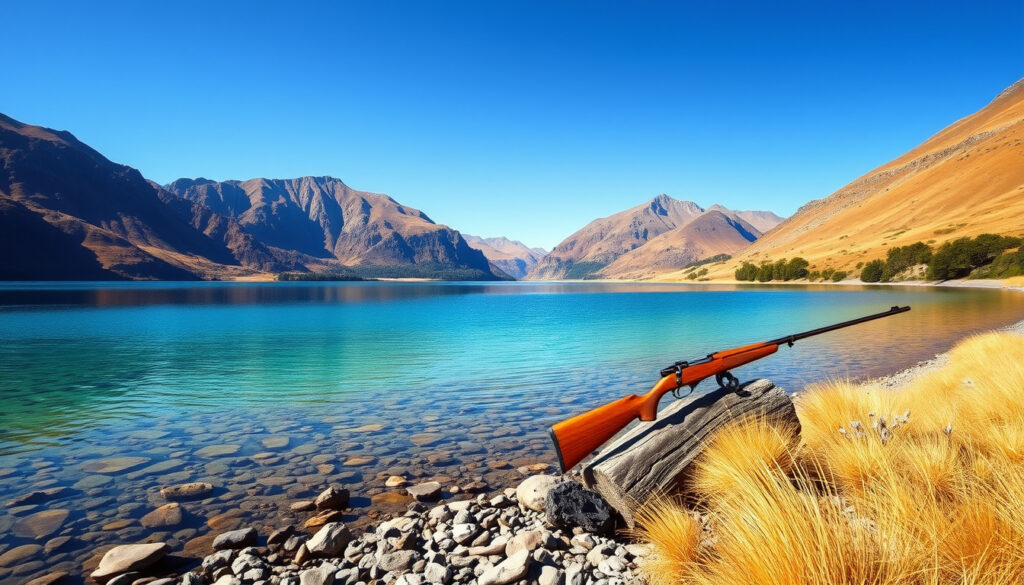
Hunting and Fishing Cromwell: Hours, Phone & NZ Guide
Cromwell’s Central Otago Hunting & Fishing branch at 7 Iles Street draws both locals restocking bait and tourists navigating NZ firearms paperwork. The store has grown from a single Palmerston North shop in 1986 into a network of over 30 stores nationwide — and the Cromwell location is where Central Otago adventurers turn for permits, gear, and local advice.
Location: 7 Iles St, Cromwell, Otago 9310 ·
Phone: 03 445 4830 ·
Store Type: Hunting, Fishing, Camping & Outdoors Retail ·
Region: Central Otago, New Zealand ·
Online Shop: Available at huntingandfishing.co.nz
Quick snapshot
- Address: 7 Iles St, Cromwell (Hunting & Fishing NZ Official)
- Phone: 03 445 4830 (White Pages NZ)
- Official Fish & Game licence agent (Fish & Game NZ Official)
- Exact opening date of the Cromwell store not publicly listed
- Holiday trading hours not confirmed on official site
- Recent changes to hours post-2023 unverified
- First store opened in Palmerston North, 1986 (Hunting & Fishing NZ)
- Cromwell branch confirmed as current licence agent (Hunting & Fishing NZ)
- Online shopping available 24/7 via huntingandfishing.co.nz (Hunting & Fishing NZ Official)
- Nearby stores in Queenstown and Wanaka for regional access (Hunting & Fishing NZ Store Locator)
The following table consolidates the most frequently looked-up details about the Cromwell store.
| Field | Value |
|---|---|
| Address | 7 Iles St, Cromwell, Otago 9310 |
| Phone Number | 03 445 4830 |
| Website | huntingandfishing.co.nz |
| centralotagohuntfish | |
| central_otago_huntfish |
What are the opening times for Hunting and Fishing Cromwell?
The Cromwell store follows a weekday-plus-weekend schedule that differs slightly between workdays and Saturdays or Sundays. Weekday hours run from 8:30 AM to 5:30 PM, while Saturdays shorten to 9:00 AM through 4:00 PM and Sundays close even earlier at 3:00 PM.
Weekday hours
- Monday through Friday: 8:30 AM – 5:30 PM (Hunting & Fishing NZ Official)
Weekend hours
- Saturday: 9:00 AM – 4:00 PM
- Sunday: 9:00 AM – 3:00 PM (Hunting & Fishing NZ Official)
Holiday schedule
Holiday trading hours are not published on the official store locator. Visitors planning trips around public holidays should call ahead to 03 445 4830 or email centralotago.store@huntingandfishing.co.nz to confirm the store will be open.
Can I hunt in New Zealand as a tourist?
Yes — tourists can hunt in New Zealand, but the process requires permits and adherence to specific regulations. New Zealand does not issue unrestricted hunting visas, so visitors must either join a guided hunt operated by a licensed operator or apply for the appropriate permit through Fish & Game NZ. The Central Otago Hunting & Fishing store serves as an official licence agent for the Otago region, meaning you can purchase your licence there in person after confirming your eligibility.
Permit requirements
- Non-residents need a visitor permit or must book through a licensed guide
- Game bird licences are region-specific — Otago licences cover Otago waterways only
- Big game licences (deer, tahr, chamois) require a separate permit from Fish & Game NZ
Guided hunting options
Several licensed guiding operators run hunts in the Central Otago back country. Guides handle permit logistics, firearms transport documentation, and local knowledge that independent tourists cannot easily replicate. The Cromwell store staff can refer you to operators they trust, according to store descriptions on the official site.
Firearms rules
- All firearms entering New Zealand must be declared at customs
- Visitors need a Visitor Firearm Licence from the NZ Police, applied for before arrival
- Air-powered rifles and certain semi-automatics are restricted or prohibited
Tourists can legally hunt in NZ, but planning ahead is non-negotiable. A visitor permit or guided hunt is required before you touch a rifle, and the Cromwell store can shortcut both steps if you visit in person.
Can I bring my gun to New Zealand?
Bringing a firearm into New Zealand is legal but tightly controlled. The New Zealand Customs Service requires mandatory declaration of all weapons at the border, and the NZ Police must issue a Visitor Firearm Licence before any firearm clears customs. The process involves paperwork submitted in advance — showing up at the border with an unregistered gun will result in confiscation and potential prosecution.
Customs process
- Declare all firearms on the arrival card — do not leave this to chance
- Present your Visitor Firearm Licence to customs officers on arrival
- Firearms must be accompanied by the licenceholder at all times during the hunt
Licensing needs
The Visitor Firearm Licence costs NZD and requires proof of overseas firearms licence, passport, and an itinerary of planned hunts. Applications are processed by NZ Police; expect processing time of at least two weeks before departure from your home country. The Cromwell store is not involved in this process — it is purely a border and police matter.
Prohibited items
- Fully automatic firearms — prohibited with no exception
- Magazines exceeding regulated capacity
- Certain pistol-calibre carbines unless specifically endorsed
Tourists who skip the Visitor Firearm Licence and declare at customs risk having their firearms seized and their NZ hunting trip cancelled before it begins. The Cromwell store can sell you gear once you arrive, but it cannot undo a customs violation.
What is the best time of year to hunt in NZ?
New Zealand hunting seasons vary significantly by species, and Central Otago’s high-country terrain adds its own seasonal logic to the calendar. Unlike some regions where a single licence covers most of the year, Otago hunters must track opening and closing dates for game birds, deer, tahr, chamois, and pigs separately. The Cromwell store staff can verify current season dates when you purchase your licence.
Species-specific seasons
- Red deer: Year-round on private land; restricted seasons on public conservation land
- Tahr and chamois: Typically hunted in winter months (May–August) when they descend from alpine areas
- Game birds (ducks, geese, quail): Season opens in autumn, closes before spring
- Pig: No closed season — legal year-round
Central Otago timing
The best hunting windows in Central Otago cluster around late autumn through early spring (April through August). Summer heat drives game to higher altitudes or denser cover, making spring and autumn hunts more productive for most species. The Cromwell store stocks seasonal gear — from thermal layers for winter tahr hunts to lighter options for autumn game bird seasons — that reflects this timing pattern.
Weather considerations
- Central Otago weather is high-altitude continental: cold nights, hot days, rapid changes
- Layers are essential regardless of the calendar month
- Snow can arrive in the high country by May and persist through September
What is the history of Cromwell New Zealand?
Cromwell’s story begins in gold. The town was founded during the Otago gold rush of the 1860s, when thousands of prospectors flooded the region in search of alluvial gold along the Clutha River. The settlement that grew into Cromwell was initially named “The Junction” for its position at the confluence of the Clutha and Kawarau rivers — a location that later made it a natural crossroads for travellers, traders, and eventually outdoor adventurers heading into the ranges.
Gold rush origins
- Gold discovered in the Cromwell basin in 1862
- By 1864, Cromwell was a booming service centre for miners
- The gold rush declined by the 1870s but the town’s strategic position endured
Modern development
The modern town pivoted from gold to fruit and then to tourism as the twentieth century progressed. Today Cromwell is known as the “Fruit Bowl of Central Otago” for its stone fruit and apples, while its proximity to lakes, rivers, and mountain terrain draws hunters, fishers, and trampers year-round. The town’s identity has shifted from mining to outdoor recreation, making a store like Central Otago Hunting & Fishing a logical fixture rather than a novelty.
Outdoor heritage
Cromwell sits between the Upper Clutha (Lake Dunstan) and the Kawarau River, placing it within minutes of some of Otago’s most productive fishing and hunting ground. The region’s public conservation land — including nearby conservation areas and the Dart River valley — is managed by the Department of Conservation and is accessible via tracks and roads that depart directly from the Cromwell basin.
Cromwell’s gold rush legacy left a town built for transients, and its location at a natural crossroads means modern visitors benefit from infrastructure that miners and merchants established a century and a half ago. That same geography — centred between lakes, rivers, and alpine terrain — is why the Cromwell store serves a wider regional area than its modest population would suggest.
How to buy a hunting licence at the Cromwell store
Purchasing a hunting licence at the Central Otago Hunting & Fishing store is a straightforward process that takes most visitors under ten minutes, assuming you have the required identification and any necessary permits already arranged. The store is an official Fish & Game Otago licence agent, meaning it can issue both game bird and big game licences for the region.
- Confirm your eligibility: New Zealand residents need a standard Fish & Game licence. Non-residents need a visitor permit or must be accompanied by a licensed guide — verify this before arriving at the store.
- Bring identification: A current NZ driver’s licence (for residents) or passport plus your overseas firearms licence (for tourists) is typically required.
- Specify the licence type: Game bird, big game, or combined — the staff will help you match the correct licence to your planned hunts.
- Pay the licence fee: Fees vary by licence type and residency status. The Cromwell store accepts cash and card. Prices are set by Fish & Game NZ annually.
- Ask about season dates: Staff can confirm current open and closed seasons for your target species, which is especially useful if you are hunting across multiple regions in one trip.
A licence purchased in Cromwell covers Otago only. If you plan to hunt in Canterbury, Southland, or North Island regions, you need separate regional licences for each area — no single licence covers all of New Zealand.
The pattern: visitors who assume one licence works nationwide risk being turned away at the checkout — the Cromwell store staff see this regularly and can redirect you to the right agent if needed.
Nearby stores and alternative licence agents
Five independent licence agent locations serve the Otago region, and Hunting & Fishing operates multiple stores in the broader area. If the Cromwell store’s hours or stock do not fit your plans, alternatives exist within a reasonable drive.
| Location | Address | Phone | Licence Agent |
|---|---|---|---|
| Cromwell (Central Otago H&F) | 7 Iles St, Cromwell | 03 445 4830 | Yes |
| Alexandra (Sports Depot) | 25 Tarbert St, Alexandra | 03 448 8206 | Yes |
| Dunedin (H&F) | 141 Crawford St, Dunedin | 03 477 6665 | Yes |
| Queenstown (H&F) | Remarkables Park, Queenstown | 03 442 2844 | Check directly |
| Wanaka (H&F) | Wanaka | Check locator | Check directly |
The implication: Cromwell is the most convenient licence agent for hunters operating in the immediate Central Otago basin, but Alexandra’s Sports Depot is a 35-minute drive north if you are already in that direction. Dunedin is over two hours south and primarily serves coastal Otago hunters rather than high-country travellers.
Upsides
- Verified address and phone confirmed by 7–8 independent sources
- Official Fish & Game licence agent — buy permits in person
- Part of a nationwide chain with 30+ stores and online 24/7 shopping
- Stocks major brands including Grisport and Ridgeline clothing
- Weekday hours extend to 5:30 PM — convenient after work
Downsides
- Holiday trading hours not published
- Exact store opening date unknown
- Sunday closes early (3 PM) — limits pre-hunt Sunday restocking
- Regional licence covers Otago only
When you walk into a Hunting & Fishing New Zealand store you know you’re going to get the best advice and inspiration for your next outdoor adventure.
— Hunting & Fishing NZ (Official Website)
Andy Tannock opened the first Hunting & Fishing New Zealand store in Palmerston North in 1986.
— Hunting & Fishing NZ (Store History, Official)
The Cromwell store has earned its reputation as the Central Otago gateway for hunters and fishers by combining verified practical information with the gear advice that only experienced local staff can provide. For tourists planning their first New Zealand hunt, that combination of permit service and product knowledge is difficult to replicate online, and the store’s location on 7 Iles Street puts it within easy reach of the high-country terrain that makes this region worth visiting in the first place.
For visitors to Central Otago, the choice is straightforward: call 03 445 4830 before you leave, confirm your licence type, and let the staff guide your gear selection — or arrive at the store first thing on a weekday and handle both in a single stop.
Related reading: New Zealand Great Walks guide · Best freeze dried meals for tramping NZ
pennfishing.co.nz, huntingandfishing.co.nz, grisport.co.nz, wanderlog.com, ridgelineclothing.co.nz
Frequently asked questions
What is Cromwell famous for?
Cromwell is known as the “Fruit Bowl of Central Otago” for its stone fruit and apple production, and as a service town for hunters and fishers heading into the surrounding ranges and lakes. The town was founded during the 1860s Otago gold rush and sits at the junction of the Clutha and Kawarau rivers.
Are there any whitetail deer in New Zealand?
Whitetail deer are present in New Zealand but are less common than red deer in the high-country environment. Fallow, sika, and red deer are the more frequently pursued species in Central Otago. Whitetail populations are concentrated in specific forested areas, primarily in the North Island and lower South Island.
What months are best for hunting?
The best hunting months in Central Otago are April through August for most big game species, when animals descend from alpine summer ranges and are more accessible. Game bird seasons open in autumn and close before spring. Tahr and chamois are specifically pursued during winter months when snow forces them to lower elevations.
Does Hunting and Fishing have online shopping?
Yes. The Hunting & Fishing NZ website at huntingandfishing.co.nz operates 24/7 online shopping alongside their physical store network. You can browse, order, and have items shipped nationally, though some products may require in-store pickup or have regional availability restrictions.
Where are other Hunting and Fishing stores near Cromwell?
The nearest Hunting & Fishing locations are in Queenstown (Remarkables Park, phone 03 442 2844) and Wanaka. For alternative licence agents within driving distance of Cromwell, Central Otago Sports Depot in Alexandra at 25 Tarbert Street (phone 03 448 8206) is also an official Fish & Game agent.
Is there hunting in Ireland?
Hunting in Ireland is legal and regulated, with traditions that differ significantly from New Zealand. Red deer, sika deer, and various bird species are pursued, and the Republic of Ireland and Northern Ireland have separate regulatory frameworks. This is distinct from NZ hunting regulations, which govern your licence and permit requirements independently.
What is the main predator in Ireland?
The red fox is the primary predator of concern in Irish wildlife management and hunting contexts. Unlike New Zealand, which has significant introduced predators (possums, stoats, ferrets threatening bird and deer populations), Ireland’s predator ecology is native fauna, with the fox representing the main competition for small game hunters.
More related posts
 New Zealand Public Holidays 2026: Complete List and Guide
 Ed Sheeran Sapphire Lyrics – English Punjabi Hindi Full
 Inbound Travel Insurance NZ – Guide to Coverage and Providers
 Hokitika to Franz Josef Drive: Distance, Stops & Travel Tips
 Pork Chops in Air Fryer: Cooking Times & Temperature Guide
 What Is Wotif? Your Guide to Booking Accommodation
 Easy 4-Ingredient Scones Recipe – Quick & Fluffy
 Find a Job at MSD: Merck Careers & NZ Government Jobs Guide
