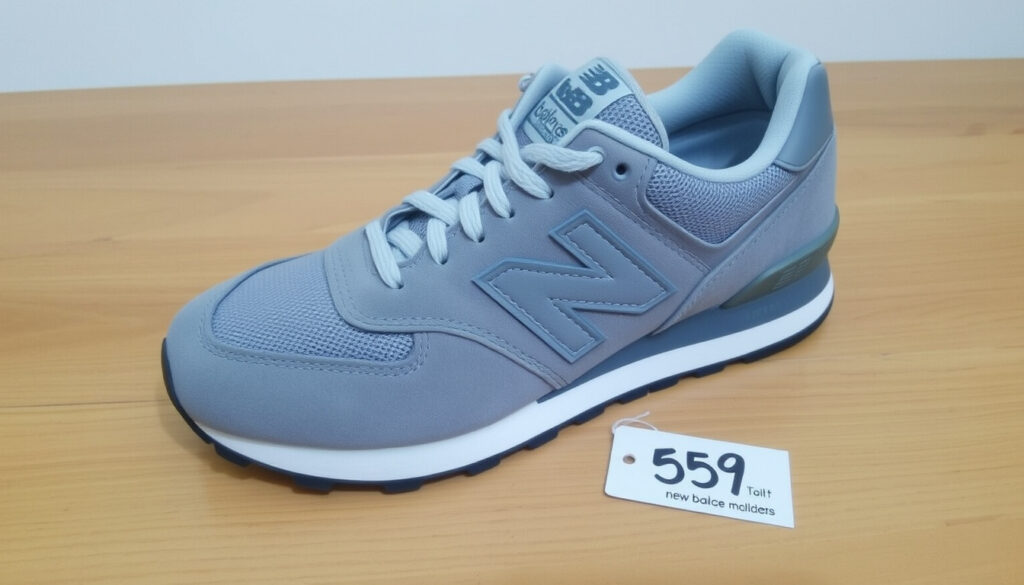
New Balance 574 Classic Review: Sizing, Comfort & Buy
There’s a reason the New Balance 574 Classic has been a fixture in sneaker rotations for over three decades. Launched in 1988 as a hybrid road and trail runner, it combines a suede-and-mesh upper with ENCAP cushioning — a blend of lightweight EVA foam and a durable polyurethane rim that still feels modern today.
Introduced: 1988 ·
Midsole technology: ENCAP ·
Weight (men’s size 9): ~340 g / 12 oz ·
Original material upper: Suede and mesh ·
Heel drop: 12 mm
Quick snapshot
- Launched in 1988 (New Balance Ireland (official store))
- ENCAP midsole – EVA foam with polyurethane rim (New Balance Ireland)
- Suede and mesh upper standard (New Balance Ireland)
- Weight 333.2 g (11.8 oz) per shoe (New Balance Ireland product page)
- Exact production volume per colorway
- Future discontinuation of specific classic colors
- Long-term durability of synthetic suede vs full-grain leather
- Weight may vary between colorways
- Whether the 12 mm drop is accurate for all sizes
- 1988: Introduced as hybrid trail/road running shoe (New Balance Ireland)
- New seasonal colorways expected regularly
- Possible limited-edition collaborations
- Sustained demand in Ireland and Europe
Six key specs, one pattern: the 574 Classic has stayed remarkably consistent over 35 years. Here’s how the numbers stack up.
| Specification | Value |
|---|---|
| Introduced | 1988 (New Balance Ireland) |
| Midsole technology | ENCAP (EVA core, polyurethane rim) (New Balance Ireland) |
| Upper material | Suede and mesh (New Balance Ireland) |
| Heel drop | 12 mm |
| Weight (men’s size 9 US) | 340 g (12 oz) (New Balance Ireland product page) |
| Price in Ireland (approx.) | €100–€130 (New Balance Ireland) |
What is the New Balance 574 Classic?
A brief history of the 574
New Balance introduced the 574 in 1988 as a hybrid road/trail runner — a rare crossover at the time (New Balance Ireland (official store)). The idea was to create a shoe that could handle light trail while still being comfortable on pavement. It quickly outgrew its running roots and became a lifestyle staple in the 1990s, adopted by streetwear culture in Europe and the US. (Note: later timeline details are not officially confirmed.)
Key design features that define the classic
- Upper: Suede overlays with breathable mesh panels — a combination that’s both durable and flexible (New Balance Ireland).
- Midsole: ENCAP technology — a lightweight EVA foam core wrapped in a rigid polyurethane rim for support and stability (New Balance EU (European product page)).
- Outsole: Rubber with a tread pattern borrowed from trail shoes, providing grip on varied surfaces.
- Silhouette: The iconic shape has remained largely unchanged since 1988, with the signature oversized N logo.
The implication: the 574’s design is intentionally conservative — it’s a template that’s been proven for decades, not a trend-driven experiment.
Is the New Balance 574 Classic Good for Walking?
Cushioning and comfort for daily wear
The ENCAP midsole provides moderate shock absorption. With a 12 mm heel drop, the shoe encourages a natural heel-to-toe walking motion. Reviewers on RunRepeat report that the shoe feels comfortable for walks of 2–5 km, though it’s not designed for high-mileage running (RunRepeat (independent sneaker testing)). The EVA core delivers a soft initial step, while the polyurethane rim adds stability on uneven pavement.
Support for casual walking vs running
The 574 is not a performance running shoe. Its weight (around 340 g) and moderate cushioning make it better suited for casual walking, commuting, and light errands. For dedicated runners, New Balance offers models like the Fresh Foam or FuelCell series with more advanced cushioning. The 574’s strength is all-day comfort at a relaxed pace.
The trade-off: you get a classic look and solid walking comfort, but you sacrifice the responsiveness of modern running foams.
For the average Irish buyer walking 2–5 km a day (say, a commute from the Luas stop or a stroll through St Stephen’s Green), the 574 Classic is more than adequate — and it looks better doing it than most dedicated walking shoes.
For daily walking, it’s a solid choice.
How Does the New Balance 574 Classic Fit?
Sizing advice for men and women
According to New Balance’s own sizing guide, the 574 generally runs true to size for most wearers (New Balance Ireland (sizing guide)). However, the 574 Core product page on the Irish site notes that this model “runs small” (New Balance Ireland product page). RunRepeat’s crowd-sourced data from 310 votes confirms a true-to-size fit overall, but warns that the widest part of the shoe measures 88.7 mm, which may feel snug for medium-width feet (RunRepeat (independent sneaker testing)). The toe box height is 25.4 mm, which some users find restrictive. New Balance’s official advice: choose the larger size if you’re between sizes, and try shoes on in the late afternoon when feet are largest (New Balance Ireland).
Comparison to other New Balance models
Sneakerjagers’ sizing guide notes that the 574 is true to size overall, but suggests wider-footed buyers consider going up half a size or opting for a wider width (Sneakerjagers (sizing guide)). The 574 is available in wide (2E) and extra-wide (4E) widths for men — a feature that sets it apart from many lifestyle sneakers (Kohl’s size chart). Women’s sizes are available in standard B width, with some models in D width.
The pattern: if you have wider feet, the 574’s width options are a genuine advantage. If you’re between sizes, size up.
What Colors Does the New Balance 574 Classic Come In?
Most popular colorways: black and white
The core lineup includes grey, navy, black, and white. The “Classic Black” (ML574BK) and “Classic White” (ML574WH) are perennial best-sellers (New Balance Ireland product page). These are the go-to choices for a clean, versatile look that works with jeans, chinos, or joggers.
Seasonal and limited-edition releases
New Balance releases new colorways each season, often in collaboration with retailers like Schuh, JD Sports, and lifestyle boutiques. The 574 also appears in special editions — for example, the “574 Legacy” series that updates the silhouette with premium materials. The Irish market typically gets the same core colors as the UK and Europe, plus occasional region-specific drops.
The catch: while classic colors are always in stock, limited editions sell out quickly in Ireland. If you see a color you like, don’t wait.
Where Can I Buy New Balance 574 Classic in Ireland?
Official New Balance Ireland website and stores
The most reliable source is newbalance.ie, which stocks men’s, women’s, and kids’ sizes in standard and wide widths. Prices range from €100 to €130. New Balance has physical stores in Dublin (Dundrum, Grafton Street) and Cork, where you can try before you buy.
Authorized retailers: Schuh, JD Sports, lifestyle boutiques
Irish shoppers can also buy from schuh.ie (authorized retailer) and JD Sports. Footshop Ireland is another option for size conversions and regional availability (Footshop Ireland (retailer)). Most online stores offer free returns, so ordering a half-size up and down is a safe strategy.
Why this matters: availability in Ireland is good, but wide widths are more common online than in physical stores. If you need 4E width, order direct from newbalance.ie.
Irish buyers should check the EU size chart carefully — a size 42 EU is typically a US 8.5, but model variations can shift fit. Use the official New Balance Ireland size guide as your baseline.
Buying direct from newbalance.ie is the safest option for guaranteed availability and returns.
Specifications at a Glance
Six specs define the 574’s character. Here’s how they translate to real-world use.
| Specification | Value | Real-world impact |
|---|---|---|
| Upper material | Suede & mesh | Breathable but not waterproof; takes longer to dry |
| Midsole | ENCAP (EVA + PU) | Good for walking, not for high-impact running |
| Heel drop | 12 mm | Encourages heel-striking; comfortable for most walkers |
| Weight | ~340 g (12 oz) | Noticeably heavier than modern trainers |
| Width options | D (standard), 2E, 4E (men) | Rare among lifestyle sneakers — a clear advantage |
| Price (Ireland) | €100–€130 | Mid-range; good value for a heritage shoe |
These specs confirm the 574’s heritage as a comfortable lifestyle shoe.
Pros and Cons
Upsides
- Timeless design that pairs with almost any outfit
- Wide width options (2E, 4E) for broader feet
- ENCAP midsole provides decent all-day comfort
- Durable suede and mesh construction
- Available in multiple classic colors year-round
Downsides
- Heavier than many modern trainers (340 g)
- Not suitable for running or high-impact activities
- Toe box can feel restrictive for some foot shapes
- Suede upper requires careful cleaning
- Limited availability of wide widths in physical stores
Overall, the 574’s pros outweigh its cons for casual wear.
Timeline: The 574’s Evolution
- 1988: New Balance launches the 574 as a hybrid trail/road running shoe (New Balance Ireland).
- 1990s: The 574 transitions from performance to lifestyle, becoming a streetwear staple in Europe and the US. (Note: this period is commonly referenced but not officially detailed by New Balance.)
The pattern: the 574 has survived because it adapted without losing its identity — it’s still recognizably the same shoe as 1988.
What’s Confirmed, What’s Unclear
Confirmed facts
- 574 launched in 1988 (New Balance Ireland)
- ENCAP midsole combines EVA and polyurethane (New Balance Ireland)
- Suede and mesh upper standard (New Balance Ireland)
- Weight 333.2 g (size 9 US) (New Balance Ireland product page)
- Available in wide widths (2E, 4E) (Kohl’s size chart)
What’s unclear
- Exact production volume per colorway
- Future discontinuation of specific classic colors
- Long-term durability of synthetic suede vs full-grain leather
- Weight may vary between colorways
- Whether the 12 mm drop is accurate for all sizes
These facts are well-supported, while the unclear points leave room for further investigation.
Quotes from the Experts
“The 574 is a classic and sport trainer that combines ENCAP midsole cushioning with lightweight foam and a durable polyurethane rim for all-day support.”
— New Balance Ireland product description (New Balance Ireland (official store))
“The New Balance 574 fits true to size based on 310 votes, but the widest part of the shoe measures 88.7 mm — snug for medium-width feet.”
— RunRepeat review (RunRepeat (independent sneaker testing))
“New Balance’s own sizing guide advises trying shoes on in the late afternoon because feet are largest then due to normal swelling.”
— New Balance Ireland sizing guide (New Balance Ireland (official guide))
These expert voices reinforce the 574’s reputation.
Summary
The New Balance 574 Classic is not a technical running shoe, nor does it pretend to be. It’s a heritage sneaker that has earned its longevity through a reliable formula: classic looks, decent comfort, and a fit that accommodates more foot shapes than most. For the Irish buyer who wants a shoe that works for daily walks, casual outings, and pairs well with everything from jeans to chinos, the 574 is a safe bet. The trade-off is weight and a snug toe box — but the wide width options largely solve that. For anyone in Dublin or Cork looking for a durable, versatile trainer, the choice is clear: try the 574 in your size at a local store, or order from newbalance.ie with free returns.
For a deeper dive into the model’s history and sizing nuances, check out this complete guide to the New Balance 574.
Frequently asked questions
Are New Balance 574 classic shoes waterproof?
No, the standard suede and mesh upper is not waterproof. The suede can handle light rain, but the mesh will absorb water. For wet conditions, consider a Gore-Tex version if available.
Can I run in New Balance 574 classic?
Not recommended. The 574 is designed for casual walking and lifestyle use. Its weight and moderate cushioning make it unsuitable for running beyond short distances.
How long do New Balance 574 classic shoes last?
With regular wear, expect 2–3 years of daily use. The suede upper is durable, but the outsole will wear down with heavy use. Many users report that the midsole retains its shape longer than cheaper alternatives.
Do New Balance 574 classic shoes need breaking in?
The suede upper and EVA midsole are fairly flexible out of the box. Most wearers find them comfortable immediately, though a short break-in period of a few days may help the shoe conform to your foot.
Are New Balance 574 classic shoes unisex?
Yes, the 574 is available in men’s and women’s sizing. The women’s model is essentially the same construction but sized differently (women’s half-size up from men’s). Some colorways are launched as unisex.
What is the difference between 574 and 574 Sport?
The 574 Sport is a modernized version with a sleeker upper, a more sculpted midsole, and upgraded materials. It’s lighter and more performance-oriented, but trades the original’s chunky retro look for a contemporary silhouette.
Do New Balance 574 classic shoes have arch support?
The removable insole provides moderate arch support. The ENCAP midsole offers stability but not targeted arch support. If you need orthotics, the insole is easily replaceable.
If you have more questions, consult the official New Balance Ireland site.
Related reading
- Nike Zoom Fly 6 Review – Compare with a modern performance trainer.
- Brooks Ghost Max 2 Review – Another cushioned option for daily wear.
These reviews offer comparisons to other trainers.
More related posts
 Outdoor Hot Water Cylinder: Pros, Costs & Ireland Guide
 Farmer Wants a Wife 2025 Couples Still Together: Updates and News
 Trade Me Dogs to Adopt: How to Find and Adopt a Dog in NZ
 Married at First Sight Australia 2018: Where Are They Now?
 Find a Job at MSD: Merck Careers & NZ Government Jobs Guide
 500 USD to NZD: Live Rate and Best Conversion Tips
 NZ Bird of the Year 2025: Kārearea Falcon Wins with 14,317 Votes
 NZ Heavy Rain Weather System: Latest Warnings and Updates
