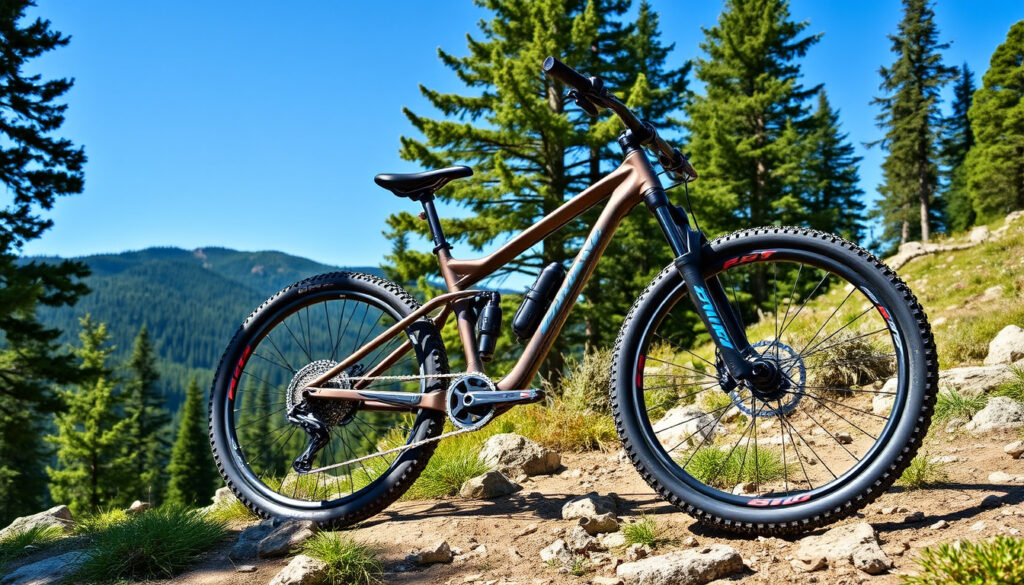
Marin Rift Zone 1 Review: Specs, Performance & Value
At $1,799, the Marin Rift Zone 1 proves you don’t need a second mortgage to get a proper trail bike. Its 130mm of rear travel and relatively slack 65.5° head angle put it squarely in the “confidence on descents, capable on climbs” category that most riders actually need. Reviewers at The Loam Wolf note the Multitrac suspension platform tracks predictably through chatter and soaks up hits without feeling wallowy on climbs. If you’ve been putting off buying a full-susser because everything decent seemed out of reach, this aluminum frame might be worth a closer look.
Rear Suspension Travel: 130mm · Frame Material: Aluminium · Tires: Vee Crown Gem · Dropper Post: X-Fusion Manic · Suspension Brand: X-Fusion
Quick snapshot
- 130mm rear travel via Multitrac system (The Loam Wolf)
- Series 3 6061 aluminium frame (The Loam Wolf)
- Both Rift Zone 1 and 2 cost under $2,000 (Marin Bikes)
- Exact 2026 model year pricing
- Pink colorway availability for 2025/2026
- Direct fork model confirmation for Rift Zone 1 specifically
- 2023 rear travel increased 5mm to 130mm with tweaked kinematics (The Loam Wolf)
- SRAM UDH dropout added in 2023 refresh (Flow MTB 2023 updates video)
- Rift Zone 1 positions below the $2,000 threshold as entry point (Marin Bikes)
- Rift Zone 2 sits at $2,400 MSRP for the mid-tier build (Mountain Bike Action)
| Label | Value |
|---|---|
| Model | Rift Zone 1 |
| Type | Full Suspension Trail Bike |
| Wheel Size | 29″ |
| Rear Travel | 130mm |
| Frame | Aluminium |
| Official Site | marinbikes.com |
Is the Marin RIFT ZONE 1 a good bike?
For the budget-conscious rider, the Rift Zone 1 delivers trail-ready geometry that typically costs twice as much. Marin uses its Multitrac suspension system across the entire alloy line, meaning the entry-level build shares the same platform architecture as the pricier variants. According to Mountain Bike Action, the 29 2 model (a step up) is “one of the best value builds in the line for the money” — and the Rift Zone 1 follows that same philosophy at a lower price point.
Performance on trails
The 130mm rear travel handles small-bump chatter competently without the wallowy feel some budget bikes suffer from. The Loam Wolf’s 2023 review noted the revised kinematics improved small-bump compliance while maintaining end-stroke support for bigger hits. At 65.5°, the head angle sits on the slacker side for a trail bike, lending stability on descents without making tight switchbacks feel twitchy. Reach ranges from 435mm on a Small to 515mm on an XL, so taller and shorter riders alike can find a fitting size. Wheelbase on the Large hits 1234.4mm — reasonably long for a trail bike at this price.
Rider reviews
Community sentiment trends positive for the value proposition. Reddit riders describe the Rift Zone 1 as “riding like a monster truck compared to Trek entry-levels” — less a complaint than an observation that the confident geometry and suspension feel more capable than the price suggests. The Loam Wolf summed it up: the Rift Zone “provides fun for a wide range of riders” thanks to its geometry and spec balance. That broad appeal matters for beginners who don’t yet know what they want in a trail bike — they’ll grow into it rather than outgrow it immediately.
The catch: stock wheels on the Rift Zone 2 reportedly flex under hard cornering, and the same alloy rims likely apply to the Rift Zone 1. Upgrading wheels yields noticeable performance gains, according to Mountain Bike Action. Budget buyers should factor potential future wheel upgrades into the total cost of ownership.
What is the difference between Rift Zone 1 and 2?
The two models share the same Series 3 6061 aluminium frame and Multitrac suspension platform, but component spec separates them meaningfully. The Rift Zone 2 adds pricier parts across the drivetrain, brakes, and suspension — upgrades that translate to real ride quality rather than marketing fluff.
Component differences
Brake rotors illustrate the gap clearly: the Rift Zone 2 uses 180mm rotors front and rear versus the Rift Zone 1’s 160mm rear rotor, according to a long-term YouTube review. Larger rotors mean more braking power and heat dissipation for aggressive riding. The Rift Zone 2 also runs a 140mm Marzocchi Bomber Z2 Rail Damper fork paired with a 130mm Rockshox Deluxe Select RT shock — both step up from whatever components the base model carries.
The drivetrain shifts up as well. BikeRadar’s review confirms the Rift Zone 29 2 uses a Shimano Deore 12-speed drivetrain with FSA Comet crankset, while the Rift Zone 1 likely drops to a lower-tier Shimano or micro-adjustment group. Rear hub spacing also differs: the Rift Zone 2 uses full 148mm Boost spacing, whereas the Rift Zone 1 reportedly uses a 142mm hub with spacers for 148 Boost axle compatibility.
Price and value
The Rift Zone 29 2 carries a $2,400 MSRP, sitting as the mid-priced option among three alloy builds ranging from $1,799 to $3,499. The Rift Zone 1 undercuts it at $1,799 — roughly $600 less. Marin Bikes’ official blog confirms both base models cost “well below $2,000.” For that price gap, buyers get upgraded brakes, a better fork, and a higher-spec shock. Whether those upgrades justify the premium depends on how hard the rider plans to push the bike.
Frame quality remains identical between the two. Both use Series 3 aluminium with double/triple-butted tubes, threaded BB shell, ISCG 5 tabs, and SRAM UDH dropout — the 2023 refresh added the UDH compatibility to both models.
The $600 difference between Rift Zone 1 and 2 mostly buys you brakes and fork performance. If you’re planning to ride hard and often, the Rift Zone 2’s spec pays dividends. If you’re still learning what trail riding means, the Rift Zone 1 leaves room to upgrade incrementally.
Is the Rift Zone 1 good for climbing?
Climbing ability on full-suspension trail bikes often comes down to two factors: pedaling efficiency through the rear suspension, and body position geometry. The Rift Zone 1 scores reasonably well on both, though it’s not a dedicated XC climber.
Suspension and geometry
At 77°, the seat tube angle puts your weight forward enough to feel planted on climbs. Combined with the 130mm Multitrac travel — tuned for small-bump compliance and end-stroke support — the rear suspension doesn’t bob excessively under power. The Loam Wolf notes the 2023 update gave the Rift Zone a “progressive leverage rate” that feels poppy and responsive rather than mushy. For climbing, that responsiveness means energy transfers reasonably well to the wheels.
Climbing performance tests
The 65.5° head angle leans toward stability over agility — a design choice that trades some climbing maneuverability for descending confidence. On sustained climbs with roots and rocks, the Rift Zone 1 tracks predictably without washing the front wheel or requiring constant weight adjustments. The aluminium frame keeps it relatively lightweight for an alloy build at this travel amount. The 140mm fork travel on the Rift Zone 2 (and likely matching fork spec on the 1) provides enough stiffness to resist brake dive on steep pitches.
The Vee Crown Gem tires on the stock build roll reasonably efficiently on hardpack, though aggressive tread blocks add rolling resistance compared to XC-specific rubber. Riders seeking maximum climbing efficiency would benefit from a lighter tire option for trail-only riding. Overall, the Rift Zone 1 climbs capably enough for most trail riding scenarios — it’s not a weakness of the design, just not the focus.
Many budget trail bikes skimp on climbing performance by using low-end suspension that blows through travel on seated pedaling. The Multitrac system, even on the base Rift Zone 1, maintains pedal platform quality that lets you climb without feeling like you’re fighting the bike.
Is the Marin Rift Zone suitable for beginners?
The Rift Zone series was literally designed with entry-level and intermediate riders in mind. Marin’s official blog identifies the Rift Zone 29 1 and 29 2 as ideal for “the budget-conscious newbie” — bikes that let newcomers experience proper trail geometry without requiring expert-level technique to get value from the spec.
Geometry and handling
The reach range from 435mm (Small) to 515mm (XL) accommodates a wide spectrum of new riders. Slack enough to inspire confidence on descents, not so slack that tight trails feel unmanageable. The 1234.4mm wheelbase on the Large provides stability at speed while remaining maneuverable enough for technical climbs. The seat angle of 77° puts beginners in a natural climbing position without requiring precise weight shifts to maintain traction.
Beginner-friendly features
Threaded bottom brackets mean easier maintenance — beginners don’t need to learn press-fit bearing quirks. SRAM UDH dropout future-proofs drivetrain upgrades. ISCG 5 tabs allow chain guide installation for technical terrain. The dropper post compatibility (X-Fusion Manic on the spec list) lets newer riders practice proper climbing position without fumbling with seatpost adjustment mid-trail.
The stock Vee Crown Gem tires strike a balance between traction and rolling efficiency. They’re not the grippiest rubber available, but they don’t penalize beginners with excessive rolling resistance on the climbs to the good descents. The alloy rims are durable enough to survive learning mishaps without immediately needing upgrade — though they’ll flex under advanced riding.
The implication: beginners who buy the Rift Zone 1 won’t outgrow it in six months. They’ll learn what they actually want from a trail bike before needing to upgrade, and they won’t have paid premium money to learn those lessons.
Are Marin bikes high end?
Marin occupies a specific niche in the mountain bike market — positioned above department-store brands and entry-level Trek/Specialized offerings, but below the premium boutique builders. Think of it as the “serious recreational” tier.
Brand positioning
Marin builds functional, well-geometred bikes with sensible component choices rather than chasing headline spec. The Rift Zone series exemplifies this approach: you get proven Multitrac suspension, SRAM UDH compatibility, and modern geometry without paying for carbon fiber or top-tier component groups. The company’s strength lies in delivering trail-ready performance at approachable price points.
Comparisons to Trek
Direct comparisons to Trek reveal the trade-offs clearly. Trek’s entry-level full-suspension offerings often use less sophisticated suspension designs or older geometry standards at similar price points. Reddit riders consistently describe the Rift Zone as feeling more capable than equivalently-priced Trek models. A direct comparison with Trek’s lineup shows Marin prioritizes suspension kinematics and frame geometry over component spec counts.
Marin isn’t competing with Yeti, Santa Cruz, or Ibis. The brand sits comfortably below those premium builders while exceeding the value propositions of mass-market brands. For riders who want modern trail bike performance without boutique pricing, Marin delivers exactly that — a considered, functional product rather than a spec-sheet champion.
Marin bikes sacrifice the cachet of premium brands and the budget appeal of mass-market competitors to occupy the middle ground: real trail performance at honest prices. Buyers get what they pay for — competent engineering rather than marketing promises.
| Spec | Rift Zone 1 | Rift Zone 2 |
|---|---|---|
| Price (MSRP) | $1,799 | $2,400 |
| Frame | Series 3 6061 Aluminium | Series 3 6061 Aluminium |
| Rear Travel | 130mm Multitrac | 130mm Multitrac |
| Fork | Not confirmed | 140mm Marzocchi Bomber Z2 Rail |
| Rear Shock | Not confirmed | 130mm Rockshox Deluxe Select RT |
| Drivetrain | TBD | Shimano Deore 12-speed |
| Front/Rear Rotors | TBD / 160mm | 180mm / 180mm |
| Rear Hub | 142mm w/spacers | 148mm Boost |
| Geometry (Large) | HTA 65.5°, STA 77°, Reach 485mm | HTA 65.5°, STA 77°, Reach 485mm |
The pattern is clear: identical frames and geometry, a meaningful fork and brake upgrade on the Rift Zone 2, and roughly 33% more MSRP — buyers pay for real component gains rather than phantom performance.
| Component | Rift Zone 1 Spec |
|---|---|
| Frame Material | Series 3 6061 Aluminium |
| Rear Travel | 130mm |
| Suspension Platform | Multitrac |
| Head Angle | 65.5° |
| Seat Angle | 77° |
| Reach (Large) | 485mm |
| Wheelbase (Large) | 1234.4mm |
| Rear Hub | 142mm w/spacers |
| Dropper Post | X-Fusion Manic |
| Tires | Vee Crown Gem |
| BB Type | Threaded |
| Derailleur Mount | SRAM UDH |
| ISCG Tabs | ISCG 5 |
Six specs stand out for buyers evaluating the Rift Zone 1 against alternatives: the Multitrac suspension platform, 65.5° head angle, SRAM UDH dropout, threaded BB, dropper post inclusion, and 130mm rear travel — a combination that’s become standard for modern trail bikes but remains rare at the $1,799 price point.
Upsides
- 130mm Multitrac travel matches far pricier competitors
- Modern geometry with 65.5° head angle and 77° seat angle
- SRAM UDH dropout future-proofs drivetrain upgrades
- Budget-friendly price point below $2,000
- Wide size range from Small to XL
- Threaded BB simplifies maintenance for beginners
Downsides
- Exact component spec for fork and drivetrain not confirmed
- 160mm rear rotor smaller than Rift Zone 2’s 180mm
- Stock wheels may flex under aggressive cornering
- Series 3 aluminium lacks smoother welds of Series 4 frames
- Vee Crown Gem tires prioritizing grip over rolling efficiency
- 142mm rear hub with spacers vs full Boost spacing
“The new Rift Zone received a boost in geometry and suspension performance to create a higher quality product that’ll provide fun for a wide range of riders.”
— The Loam Wolf (Specialist MTB Review Site)
“Our Rift Zone is the 29″ 2 model—the mid-priced of the three options and, in our opinion, one of the best value builds in the line for the money.”
— Mountain Bike Action (Industry Publication)
“The budget-conscious newbie will love the Rift Zone 29 1 and Rift Zone 29 2, both of which come with aluminum frames and cost well below $2000.”
— Marin Bikes (Official Manufacturer Blog)
For first-time full-suspension buyers weighing the Rift Zone 1 against a hardtail upgrade, the math is straightforward: at $1,799, you’re getting modern trail geometry and 130mm of proven suspension travel. Hardtails at the same price typically offer either better components or simpler maintenance — but not the descents capability that makes trail riding actually fun. The Rift Zone 1 essentially removes the excuse that you can’t afford to ride proper trails.
Related reading: New Zealand Great Walks · Freeze Dried Meals for Tramping
Frequently asked questions
What is the Marin Rift Zone 1?
The Rift Zone 1 is Marin’s entry-level alloy trail bike featuring 130mm of rear travel via the Multitrac suspension system, a Series 3 6061 aluminium frame, and modern 29″ geometry. It serves as the most affordable full-suspension option in the Rift Zone lineup.
How much does the Marin Rift Zone 1 cost?
The Rift Zone 1 carries a $1,799 MSRP in the US market, making it one of the more affordable full-suspension trail bikes with modern geometry. UK pricing and availability may vary by retailer.
What are the main specs of the Marin Rift Zone 1?
Key specs include 130mm rear travel, Series 3 6061 aluminium frame, 65.5° head angle, 77° seat angle, 485mm reach on Large, X-Fusion Manic dropper post, Vee Crown Gem tires, SRAM UDH dropout, and threaded bottom bracket.
Is the Marin Rift Zone 1 good for beginners?
Yes. Marin designed the Rift Zone 1 for budget-conscious and newer riders. The forgiving geometry, dropper post compatibility, wide size range, and sensible maintenance features like a threaded BB make it well-suited for beginners still learning trail techniques.
How does the Rift Zone 1 compare to Rift Zone 2?
The Rift Zone 2 costs roughly $600 more ($2,400 vs $1,799) and adds a 140mm Marzocchi Bomber Z2 fork, 180mm rotors front and rear, Shimano Deore 12-speed drivetrain, and full 148mm Boost rear hub. Both share the same frame, geometry, and Multitrac suspension platform.
What colors are available for Marin Rift Zone 1?
Color options vary by model year and region. Specific availability for 2025/2026 colorways — including reports of a pink option — remains unconfirmed across verified sources. Check with local Marin dealers for current color selections.
Is the Marin Rift Zone 1 suitable for climbing?
The Rift Zone 1 climbs capably thanks to its 77° seat angle, efficient Multitrac suspension platform, and moderate weight for an aluminium trail bike. It’s not an XC climber, but for most trail riding scenarios, climbing performance is a strength rather than a weakness of the design.
More related posts
 Vape Store Near Me – Find Vape Shops in Ireland
 New Zealand Currency in India: NZD to INR Rates & Salaries
 ESK Skin Care Reviews: Real Results & User Feedback
 Cheapest Car Insurance Under 21: 2026 Guide for US & Ireland
 Did Robert Irwin Win Dancing with the Stars? 2025 Winner Update
 Trade Me Cats for Sale: Buy, Adopt & Care Guide (NZ)
 New Zealand Home Loan Rate Cuts 2026: Westpac 4.99%
 How Long Does Botox Last? Duration by Area & Factors
