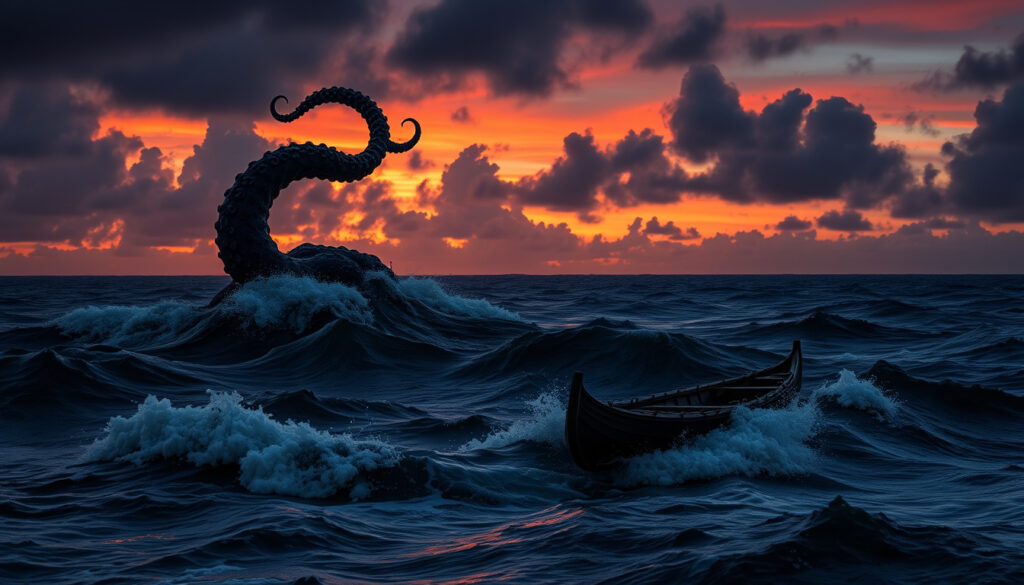
Kupe and the Giant Wheke: Myth, Meaning and Impact
Every great story has a chase, but few have shaped a nation’s identity like the pursuit of a giant octopus across the Pacific. The legend of Kupe and Te Wheke is more than a myth—it’s a memory of real voyages, encoded in oral tradition.
Kupe’s legendary journey length: ~2,500 km across the Pacific Ocean ·
Octopus species targeted: Giant wheke (Enteroctopus zealandicus) ·
Discovery date according to tradition: ~925 AD ·
Distance from Hawaiki to Aotearoa: ~3,500 km ·
Number of traditional iwi connected to Kupe: Multiple iwi (e.g., Ngāpuhi, Ngāti Kahungunu)
Quick snapshot
- Kupe is a well-known figure in Māori oral history (Te Ara – Encyclopedia of New Zealand)
- The Te Wheke model is used by the Ministry of Health (New Zealand Ministry of Health)
- Octopuses have two genders (male and female) (Wikipedia – Octopus reproduction)
- The exact year of Kupe’s journey is not precisely known (World History Encyclopedia)
- Whether Kupe was a real person or a mythological figure is debated (Te Ara – Encyclopedia of New Zealand)
- The specific species of the giant wheke is not verified in modern biology (World History Encyclopedia)
- ~925 AD: Kupe leaves Hawaiki in pursuit of Te Wheke (FutureLearn – Te Papa)
- 12th–14th centuries: Subsequent waves of Māori migration from Hawaiki (Te Ara – Māori peoples)
- 1984: Dr. Mason Durie introduces the Te Wheke health model (NZ Ministry of Health)
- Continued research into oral histories and Polynesian navigation techniques (World History Encyclopedia)
- Growing use of the Te Wheke model in Māori health initiatives (NZ Ministry of Health)
- Integration of pūrākau (Māori myths) into school curricula (Mātauranga Māori – Ministry of Education)
Six key facts, one pattern: the story bridges myth and geography, turning an octopus chase into a navigational memory aid.
| Label | Value |
|---|---|
| Who | Kupe, a Polynesian navigator |
| What | Chase of the giant octopus Te Wheke-a-Muturangi |
| When | Traditional date ~925 AD |
| Where | From Hawaiki across the Pacific to Aotearoa |
| Outcome | Discovery of Aotearoa (New Zealand) |
| Significance | Origin story for Māori settlement |
What is the story of Kupe and Te Wheke?
The journey from Hawaiki
According to the Mātauranga Māori resource (Ministry of Education, New Zealand), Kupe was a rangatira (chief) and great fisherman living in Hawaiki, the ancestral homeland of the Māori. When the giant octopus Te Wheke-o-Muturangi began stealing bait and causing trouble, Kupe resolved to chase it.
- Kupe ordered his warriors into sailing positions on his waka (canoe), the Matawhaorua (FutureLearn – Te Papa museum perspective).
- His wife Hine-te-Aparangi and family accompanied him; a second waka, Tawhirirangi, captained by his friend Ngake or Ngahue, sometimes appears in versions (FutureLearn).
The departure from Hawaiki wasn’t a random chase—it was a deliberate voyage with a crew, provisions, and navigational intent, reflecting real Polynesian voyaging practices.
The pursuit of the giant octopus
The chase lasted for weeks across the open Pacific, with Te Wheke leading Kupe’s canoes through thousands of kilometres of ocean (Mātauranga Māori). During the pursuit, Hine-te-Aparangi spotted a long white cloud on the horizon and cried out that land was near. She named the land Aotearoa – ‘land of the long white cloud’ (Mātauranga Māori).
“Hine-te-Aparangi sees a long cloud in the distance and identifies it as a sign that land is near.”
– Mātauranga Māori – Ministry of Education
Kupe eventually defeated Te Wheke by throwing gourds overboard to distract the octopus, then leaping onto its back and striking a fatal blow (Mātauranga Māori). The story notes that the octopus was considered a bad omen, yet it paradoxically led Kupe’s people to a new home (World History Encyclopedia).
The naming of Aotearoa’s landmarks
Kupe named many geographic features based on events during the chase. Examples include Te Whanganui-a-Tara (Wellington Harbour), Raukawakawa (Cook Strait), and various other headlands and islands (Te Ara – Encyclopedia of New Zealand). These place names serve as mnemonic anchors, preserving the story in the landscape.
Why is Kupe important in Māori history?
Symbolism of Kupe as a navigator
Kupe embodies the ideal Polynesian explorer: fearless, resourceful, and deeply connected to the sea. His story demonstrates that long-distance ocean crossings were possible using memory, star knowledge, and wave patterns (World History Encyclopedia). The chase narrative isn’t just adventure – it’s a teaching tool for navigation.
- Kupe is credited with discovering Aotearoa after a deliberate voyage – not an accidental drifting (FutureLearn).
- His journey is sometimes regarded as the first Māori settlement voyage, though later waves of migration were larger (Te Ara – Māori peoples and Europeans to 1840).
Role in iwi genealogies
Kupe is considered a founding ancestor for several iwi (tribes), including Ngāpuhi and Ngāti Kahungunu (Te Ara – Kupe). Iwi genealogies (whakapapa) trace descent from Kupe, linking contemporary Māori communities to the voyaging past. This makes the story not a distant myth but a living family history.
Connection to the Te Wheke health model
In 1984, Dr. Mason Durie introduced the Te Wheke model of Māori health, using the octopus as a metaphor for wellbeing (New Zealand Ministry of Health). Each of the eight tentacles represents a dimension of health (e.g., spiritual, physical, family). The head represents the individual, and the tentacles connect to form a whole. This shows how a traditional symbol can be adapted for contemporary healthcare.
“The Te Wheke model uses the octopus as a metaphor for health, with eight tentacles representing health dimensions.”
– New Zealand Ministry of Health
For Māori communities, the Kupe story and the Te Wheke model offer a culturally grounded framework for both history and public health – one that mainstream narratives often overlook.
Who was Te Wheke?
Te Wheke-a-Muturangi
Te Wheke (the octopus) belonged to Muturangi, a tohunga (ritual expert) from Hawaiki (FutureLearn – Te Papa). The full name Te Wheke-a-Muturangi means “the octopus of Muturangi”. In the story, it is described as a giant octopus that caused trouble by stealing bait from fishermen, leading Kupe to pursue it.
- The octopus is sometimes seen as a pet or guardian of Muturangi, though the tohunga does not intervene in the chase (FutureLearn).
- In some versions, Te Wheke is not entirely evil – it is a “bad omen” that ultimately leads the people to land (Mātauranga Māori).
Role in the Kupe story
Te Wheke is the antagonist that drives the plot. Without the octopus’s theft, Kupe may never have left Hawaiki. The octopus’s size and speed test Kupe’s determination, and its defeat marks the climax of the journey. The story attributes the discovery of Aotearoa to this chase.
Symbolism in Māori culture
The octopus (wheke) is a symbol of intelligence, adaptability, and interconnectedness. In mythology, it represents the unknown depths of the ocean – both a threat and a guide. The Te Wheke health model draws on this duality, using the octopus’s tentacles to represent multiple, interconnected dimensions of health (NZ Ministry of Health).
What is a wheke in Māori?
Literal translation
The word wheke simply means “octopus” in the Māori language (Te Aka Māori Dictionary). It refers to any octopus species found in New Zealand waters, including the giant octopus Enteroctopus zealandicus.
Cultural significance of the octopus
Octopuses feature in many Māori stories as clever, dangerous creatures. They were a food source for some coastal iwi, but also seen as spiritual beings (Te Ara – Sea life). The wheke appears in whakataukī (proverbs) as a symbol of tenacity and resourcefulness.
Use in the Te Wheke health model
Developed by Dr. Mason Durie in 1984 (NZ Ministry of Health), the Te Wheke model represents health through eight dimensions:
- Wairua (spirituality)
- Hinengaro (mind)
- Tinana (body)
- Whānau (family)
- Whenua (land and roots)
- Mauri (life force)
- Hā (breath of life)
- Mana ake (unique identity)
The catch: while the model is widely taught in New Zealand health contexts, its mythological roots are often simplified; the full richness of the Kupe story adds depth that is frequently missed.
Do octopuses have two genders?
Octopus biology
Yes, octopuses have two distinct genders: male and female (Wikipedia – Octopus reproduction). Males have a specialised arm called a hectocotylus used to transfer sperm to the female. After mating, females lay thousands of eggs and guard them until they hatch, then die shortly after.
Sexual dimorphism in octopuses
Males and females differ in some physical traits: males tend to be smaller in many species, and the hectocotylus is unique to males (Nature Scientific Reports – octopus sexual dimorphism). This two-gender system is typical for cephalopods. The giant wheke (Enteroctopus zealandicus) follows the same pattern.
Timeline
- ~925 AD: Kupe leaves Hawaiki in pursuit of Te Wheke (FutureLearn – Te Papa).
- ~925 AD: Kupe sights Aotearoa, names many locations (Mātauranga Māori).
- 12th–14th centuries: Subsequent waves of Māori migration from Hawaiki (Te Ara).
- 19th–20th centuries: Written documentation of the oral tradition by ethnographers (Te Ara – Kupe).
- 1984: Dr. Mason Durie introduces the Te Wheke health model (NZ Ministry of Health).
Clarity: what we know and what remains uncertain
Confirmed facts
- Kupe is a well-known figure in Māori oral history (Te Ara).
- The Te Wheke model is used by the Ministry of Health (NZ Ministry of Health).
- Octopuses have two genders (male and female) (Wikipedia).
What remains unclear
- The exact year of Kupe’s journey is not precisely known (World History Encyclopedia).
- Whether Kupe was a real person or a mythological figure is debated (Te Ara).
- The specific species of the giant wheke is not verified in modern biology.
Quotes from key voices
“The Kupe story is generally accepted to have begun in Raiatea or Hawaiki, and it encodes crucial navigational knowledge.”
– FutureLearn – Te Papa (Museum of New Zealand perspective)
“Kupe is considered a founding ancestor for several iwi, and his story is part of Māori oral history and pūrākau.”
– Te Ara – Encyclopedia of New Zealand (government reference)
“The Te Wheke model uses the octopus as a metaphor for health, with eight tentacles representing health dimensions.”
– New Zealand Ministry of Health – Te Wheke model explanation
Summary: What the myth means today
The Kupe and Te Wheke story is far more than a monster chase. It is a record of real navigation techniques, a founding legend for iwi identity, and a source of symbols used in modern Māori health models. For New Zealand’s educational system and cultural institutions, the challenge is to present the tale not as a quaint myth but as a living, practical knowledge system. The conclusion is clear: treat it as oral history with encoded data, or risk losing the navigational wisdom of the Pacific’s greatest voyagers.
Like the Māori legend of Māui and the giant fish, the story of Kupe and the giant wheke offers a mythical explanation for the shape of New Zealand’s coastlines.
Frequently asked questions
What is the most famous Māori myth?
Many would say the story of Māui fishing up the North Island, but the Kupe and Te Wheke legend is among the most prominent for its connection to actual migration and discovery (Te Ara – Māori myths and legends).
What are white Māori called?
The term for a person of European descent who is part of Māori culture is Pākehā Māori. This historically referred to Europeans who lived among Māori and adopted their customs (Te Ara – Pākehā Māori).
How long is the Kupe and the giant wheke story?
The narrative is usually told in a few paragraphs in written form, but oral versions can last much longer, with detailed descriptions of landmarks and genealogical asides (Mātauranga Māori).
Is Kupe mentioned in other Polynesian cultures?
Variants of the Kupe story appear in other Pacific cultures, such as the Cook Islands and Tahiti, where similar figures are known as Kūpe or similar (World History Encyclopedia).
What happened to Te Wheke at the end of the story?
After leading Kupe across the Pacific, Te Wheke was killed when Kupe threw gourds overboard to distract it, then jumped onto its back and struck a fatal blow (Mātauranga Māori).
Are there any modern adaptations of the Kupe and wheke story?
Yes. The story has been adapted into school journals, children’s picture books, and digital resources. It also inspired the Te Wheke health model (NZ Ministry of Health) and appears in documentaries about Polynesian navigation.
More related posts
 Lyall Bay Surf Cam: Live Stream, Surf Report & Conditions
 Takapuna Surf Club Photos: Menu, Reviews, Booking Guide
 Pork Belly Recipe NZ: Oven, Slow Cooker, Crispy Crackling
 New Zealand Public Holidays 2026: Complete List and Guide
 Gallagher Electric Fence Unit – Models, Installation, Reliability Guide
 The Roaming Giant Menu: Prices, Bottomless Brunch & Specials
 Character Requirements for NZ Citizenship Explained
 SpinBet Free Spins Code Hack: Verified Bonuses & How to Claim
