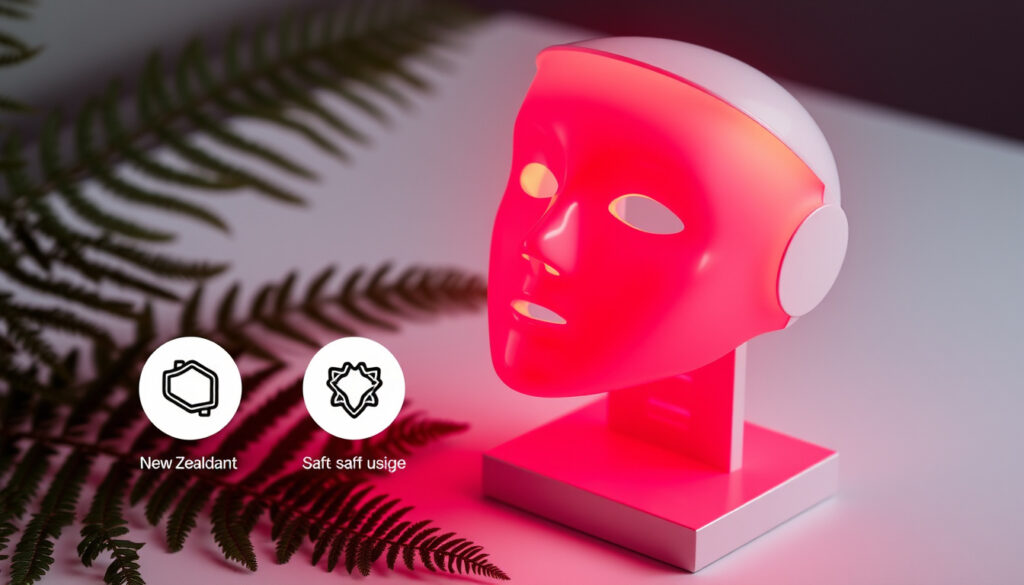
Red Light Mask NZ: Best Options, Reviews & Safety Guide
Walk into any New Zealand beauty retailer lately and you’ll spot them — sleek, futuristic face masks studded with glowing LEDs, promising to zap wrinkles, calm breakouts, and give skin that just-had-a-facial radiance. Red light masks have gone from clinic-only treatments to mainstream beauty counters at Caci, Sephora, and The Warehouse. But behind the glowing marketing, a dermatologist is raising alarms about what those Instagram-worthy selfies might actually be costing you.
Common Red LED Wavelength: 630nm · LED Count in Warehouse Model: 96 lights · Light Modes in Warehouse Model: 7 modes · Top Retailers in NZ: Caci, Sephora, Warehouse · Key Concern from Dermatologists: Serious side effects possible
Quick snapshot
- Red LED penetrates the epidermis into the dermis (1News New Zealand)
- Multiple NZ retailers now stock at-home LED masks (The Warehouse NZ)
- Long-term efficacy data for consumer-grade devices
- Safety for conditions like lupus or photosensitive skin disorders
- From clinic-only (pre-2010s) to mainstream retail (2020s) (MoleMap NZ)
- Industry observers urge regulation clarity as sales surge in NZ
The following table summarises key facts used throughout this guide, cross-referenced against retailer and dermatology sources.
| Label | Value |
|---|---|
| Primary Benefit Claimed | Stimulates collagen production |
| Common Wavelength | 630nm red light |
| Retail Availability | Caci, Sephora NZ, Warehouse |
| Dermatologist Note | Urges caution due to side effects |
Do Red Light Face Masks Really Work?
The science behind red light therapy is grounded in photobiology. Red LED wavelengths in the 630nm range penetrate the epidermis and travel into the dermis, where skin cells absorb the light energy (1News New Zealand). Proponents claim this boosts mitochondrial activity, essentially giving your cells a energy kickstart that translates into increased collagen production.
Benefits for anti-ageing and acne
Red light masks target two major skin concerns simultaneously. Red wavelengths stimulate collagen and elastin, addressing fine lines and firmness, while blue light — found in masks like the Skinsmiths LED Facial Mask — targets acne-causing bacteria (Caci NZ). The Skinsmiths mask offers five treatment settings controlled via remote, allowing users to switch between modes.
The Skinsmiths mask (available at Caci) claims red and near-infrared LED improves skin cell health, elasticity and texture — but that claim carries medium confidence, per Caci’s own product page. Greenlight for the features; treat the marketing adjectives with some caution.
Evidence from NZ products
Treatment sessions typically last 10–30 minutes with no downtime, according to MoleMap NZ (MoleMap NZ). At-home devices like the Poppi Facial LED Mask (available at The Warehouse) feature seven colour modes — red, blue, green, yellow, violet, white, and orange — with 96 high-efficiency LED lights and seven intensity levels (The Warehouse NZ).
The implication: the hardware is getting sophisticated. Whether that translates to measurable results in your bathroom remains contested territory.
What is the Downside of Red Light Therapy?
Not everyone is buying the glow. Dermatologist Louise Reiche called red light therapy “absolutely a gimmick” in a 1News investigation, raising serious questions about the gap between marketing claims and clinical reality (1News New Zealand). Her concern isn’t fringe opinion — it’s grounded in how light interacts with human tissue.
Potential side effects
Red light therapy can cause side effects on tissues depending on how it’s applied. Consumers may experience immediate results where skin glows and appears sunburnt — a visual cue that something is happening to the skin’s surface (1News New Zealand). The catch: while ultraviolet rays are well-documented contributors to photoaging and skin cancers, the long-term effects of regular red light exposure remain less established.
Potential adverse effects may not show up for 10–20 years after treatment, according to Reiche. That’s not a typo — the latency period is part of why this risk is easy to dismiss when you’re glowing in the mirror.
Dermatologist warnings
Reiche recommends against consumers buying red light masks online for self-use. Professional red light therapy administration requires medical specialist oversight, rigorous calibration standards, and practitioners with proper training (1News New Zealand). Medical equipment in clinical settings undergoes quality control that consumer devices simply aren’t held to.
What this means: the device sitting on your pharmacy shelf wasn’t built with the same precision standards as the machine at a dermatologist’s rooms. That gap matters more when you’re using it regularly.
Who Cannot Do Red Light Therapy?
Red light therapy is not universally safe. Photosensitive individuals — those whose skin reacts abnormally to light — should avoid these devices entirely. The mechanism that makes red light potentially beneficial for one person can trigger damaging reactions in another.
Contraindications overview
Certain medications amplify light sensitivity. Common culprits include antibiotics like tetracycline, some antidepressants, and even over-the-counter anti-inflammatory drugs. If you’re taking anything that warns against sun exposure, that warning likely extends to LED masks.
Specific conditions
MoleMap NZ states red light therapy is generally considered safe and suitable for all skin types (MoleMap NZ), but this contradicts the more cautious stance from Reiche. The tension reflects genuine uncertainty: robust clinical data on at-home devices is thin. Conditions like lupus, porphyria, or active skin infections warrant a conversation with a dermatologist before you power up.
The trade-off: the accessibility of at-home devices is a feature for most buyers but a risk for the minority with photosensitive conditions. Know your skin history before you treat.
Are LED Masks Safe for Rosacea?
Rosacea-prone skin is notoriously temperamental. Red light therapy’s anti-inflammatory properties theoretically make it a fit — red wavelengths can reduce redness and calm the vascular inflammation characteristic of rosacea. But the evidence base is still catching up to the marketing.
Red light for inflammation
The mechanism is straightforward: red LED penetrates skin layers and may modulate inflammatory pathways. For rosacea sufferers dealing with persistent flushing and visible capillaries, this sounds promising. However, applying light to already-reactive skin carries risk if the device produces inconsistent wavelengths or overheats.
NZ product claims
The LED Beauty Face Cover at Bargain Chemist NZ uses LED light therapy to target various skin concerns, including what could be interpreted as redness-related issues (Bargain Chemist NZ). But “various skin concerns” is marketing language, not a rosacea-specific endorsement. No NZ product carries explicit clinical approval for rosacea treatment.
If you have rosacea, proceed cautiously. Test any LED mask on a small skin area first and discontinue if you notice increased redness or warmth. The science is promising enough to explore; the evidence isn’t robust enough to trust blindly.
Best Red Light Masks in NZ
Three retailers dominate the New Zealand market: Caci, The Warehouse, and Bargain Chemist. Each stocks distinct products at different price points, from budget-friendly options to professional-grade systems.
Top options from Caci, Sephora
Caci positions itself as the professional-grade option in New Zealand. The Skinsmiths LED Facial Mask targets signs of aging and acne-causing bacteria with both red and blue light, offering five treatment settings via a handheld remote (Caci NZ). International accolades reinforce the category: Good Housekeeping’s 2026 testing named the Therabody Theraface Mask Glo as best overall LED face mask, while the Dr. Dennis Gross Skincare SpectraLite FaceWare Pro took best for sensitive skin (Good Housekeeping).
Reviews and prices
The Warehouse offers the Poppi Facial LED Mask at a budget price point. It features seven LED colour modes, 96 high-efficiency LED lights, and a rechargeable 1200mAh battery with USB-C charging (The Warehouse NZ). The trade-off for the lower price is fewer clinical guarantees and less sophisticated wavelength calibration than you’d get from a clinic-grade device.
The pattern: premium retailers like Caci justify higher prices with more treatment modes and clinical positioning. Warehouse-style retailers offer the technology at scale but with less hand-holding on usage protocols.
The following comparison highlights key specifications across available products, drawn from retailer listings and testing publications.
| Product | LED Modes | Intensity Levels | LED Count | Retailer |
|---|---|---|---|---|
| Skinsmiths LED Facial Mask | Red + Blue | 5 settings | Not disclosed | Caci NZ |
| Poppi Facial LED Mask | 7 (Red, Blue, Green, Yellow, Violet, White, Orange) | 7 | 96 | The Warehouse NZ |
| LED Beauty Face Cover | Multiple | Not disclosed | Not disclosed | Bargain Chemist NZ |
| Therabody Theraface Mask Glo | Multiple | Multiple | Not disclosed | Sephora (international) |
| Omnilux Clear | Red + Infrared | Not disclosed | Not disclosed | Sephora (international) |
This specification table compiles verified product attributes sourced from retailer product pages and industry testing reports.
| Specification | Value | Source |
|---|---|---|
| Common Red LED Wavelength | 630nm | Industry standard |
| Poppi Facial LED Mask LED Count | 96 | The Warehouse NZ product listing |
| Poppi Facial LED Mask Battery | 1200mAh | The Warehouse NZ product listing |
| Poppi Facial LED Mask Colour Modes | 7 | The Warehouse NZ product listing |
| Poppi Facial LED Mask Intensity Levels | 7 | The Warehouse NZ product listing |
| Skinsmiths LED Mask Treatment Settings | 5 | Caci NZ product specification |
| Typical Treatment Duration | 10–30 minutes | MoleMap NZ clinical guidance |
| Adverse Effects Latency Period | 10–20 years | 1News NZ investigative report |
Upsides
- Non-invasive treatment with no downtime
- Addresses multiple skin concerns (aging, acne, redness)
- Increasingly affordable and accessible in NZ
- Home use flexibility with 10–30 minute sessions
- Multiple wavelength options for targeted treatment
Downsides
- Side effects possible depending on application
- Potential adverse effects may not manifest for 10–20 years
- Consumer devices lack clinical-grade calibration
- Contraindicated for photosensitive individuals
- Limited long-term efficacy data for at-home devices
Confirmed vs Unclear
- Red light penetrates into dermis (1News NZ investigative reporting)
- Multiple NZ retailers stock masks (The Warehouse NZ product listing)
- Treatment typically 10–30 minutes (MoleMap NZ clinical guidance)
- Dermatologist raising safety concerns (1News NZ investigative reporting)
- Long-term efficacy data for consumer devices
- Safety for lupus patients or photosensitive conditions
- Optimal treatment frequency for different skin types
“I would recommend against consumers buying red light masks online for self-use. Medical equipment undergoes rigorous calibration standards and practitioners receive rigorous training. Professional red light therapy administration requires medical specialist advice.”
— Dermatologist Louise Reiche, via 1News New Zealand (April 2024)
“Sun protection is the most effective measure for preventing photoaging and photocarcinogenesis.”
— Dermatologist Louise Reiche, via 1News New Zealand
Red light masks have moved from dermatology clinics to Kiwi bathroom shelves in under a decade. The technology is real — red wavelengths do penetrate skin, and some users report visible improvements in skin tone and texture. But the gap between a $50 Warehouse impulse buy and a professionally calibrated clinical session is substantial, and New Zealand consumers deserve to understand that trade-off before they power up.
For New Zealand buyers, the decision isn’t simply “buy or don’t buy.” It’s “buy which device, with what expectations, and after what precautions?” Dermatologist warnings aren’t designed to kill a promising technology — they’re a call for smarter, more informed use.
Related reading: ESK Skin Care Reviews · Best Cleanser for Oily Skin
Popular picks like those from Caci pair well with premium devices, where the Omnilux LED mask NZ review details Omnilux’s FDA-cleared benefits and steep NZ pricing for rosacea-prone skin.
Frequently asked questions
What wavelengths are used in red light masks?
Most consumer red light masks use wavelengths in the 630nm range for red light, which penetrates the epidermis and reaches the dermis. Blue light (around 415nm) targets acne bacteria. The Poppi Facial LED Mask includes seven colour modes ranging from red to violet, giving users multiple wavelength options in one device.
How often should I use a red light mask?
Clinical guidelines suggest sessions of 10–30 minutes. Most manufacturers recommend 3–5 sessions per week initially, tapering to maintenance use. However, overuse risks exist — follow product instructions and consider consulting a skin professional if you have underlying conditions.
Are there red light masks at Chemist Warehouse NZ?
Bargain Chemist NZ stocks the LED Beauty Face Cover, which uses LED light therapy to target various skin concerns. Availability varies; check your local store or retailer website for current stock and pricing.
What do customer reviews say about NZ LED masks?
Specific NZ customer review data wasn’t included in current research. General patterns from international reviews indicate mixed results — some users report improved skin texture and reduced redness, while others notice minimal change. Individual results vary significantly based on skin type, consistent use, and device quality.
Is Omnilux LED mask available in NZ?
Omnilux Clear is rated as the best LED mask for acne by Good Housekeeping. While international availability includes Sephora, direct availability at New Zealand retailers requires checking current stock. Omnilux products are clinic-premium devices with more rigorous wavelength calibration than budget alternatives.
More related posts
 What Is Wotif? Your Guide to Booking Accommodation
 Exterior House Painters Auckland – Top Picks, Costs and Hiring Guide
 Roof Moss Treatment Auckland: Costs, Best Options & Guide
 Secret Lives of Mormon Wives Season 3: Cast Updates & Renewal
 Lighting Direct New Plymouth: Contact, Reviews & Returns
 Flights Queenstown to Sydney: Compare Airlines & Prices
 Podcasts for Learning English: Best Free Picks for 2025
 How to Tame a Silver Fox on Dailymotion: Watch, Plot & Legality
