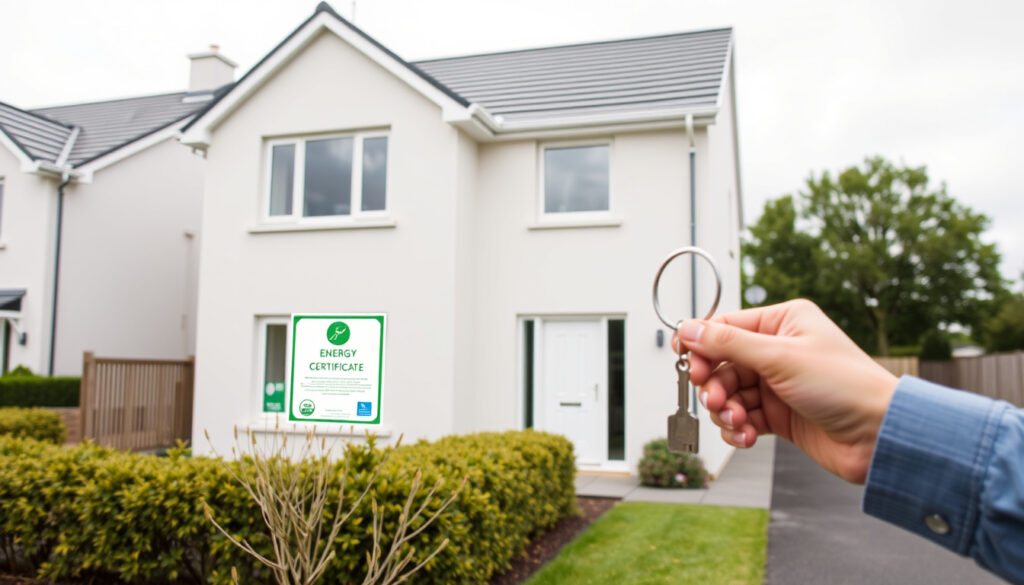
Government First Home Grant Ireland: HTB & FHS Guide
For anyone trying to buy their first home in Ireland, the hardest question is often just how to get started — especially when two government schemes promise help but work entirely differently. The Help to Buy scheme offers a tax refund of up to €30,000 for new builds, while the First Home Scheme steps in with a shared equity loan of up to 30% of the price. This guide breaks down both schemes side by side, so you can see which one fits your situation — and whether you can use them together.
Help to Buy maximum grant: €30,000 ·
First Home Scheme equity share: up to 30% ·
First Home Scheme single income limit: €80,000 ·
Help to Buy maximum property price: €500,000
Quick snapshot
- Help to Buy offers up to €30,000 (Citizens Information (Ireland’s official public service))
- First Home Scheme income limit is €80,000 for singles (gov.ie (Department of Housing))
- Both schemes require new builds (Citizens Information (guide to First Home Scheme))
- Future changes to scheme parameters
- Specific eligibility for self-employed applicants
- Help to Buy runs until 31 December 2029 (Citizens Information (scheme timeline))
- First Home Scheme launched July 2022 as a €400m fund (gov.ie press release (Dept of Housing))
- Check eligibility for both schemes before starting your house hunt
- Get mortgage approval in principle before applying to First Home Scheme
The pattern is clear: both schemes target new builds exclusively, not second-hand homes, and each uses a different financial mechanism to help first-time buyers.
| Detail | Help to Buy | First Home Scheme |
|---|---|---|
| Year launched | 2017 | 2022 |
| Maximum grant/equity | €30,000 | 30% of property value (20% in Dublin) |
| Property type | New build only | New build only (including self-build) |
| Second-hand eligible? | Not eligible | Not eligible |
| Official website | revenue.ie | firsthomescheme.ie |
The implication: Neither scheme helps buyers of existing homes, so those buyers must rely entirely on mortgage approval and savings.
What grants can I get as a first-time buyer in Ireland?
Ireland offers several government-backed supports to help first-time buyers onto the property ladder. The two main ones are the Help to Buy (HTB) scheme and the First Home Scheme, each working in a fundamentally different way. A third option, the Affordable Purchase Scheme, operates through local authorities but is less widely used.
Help to Buy (HTB) Scheme
- HTB is a tax refund, not a loan. First-time buyers can claim back income tax and DIRT paid over the previous four years, up to 10% of the property value or €30,000 — whichever is lower (Citizens Information (Ireland’s official public service)).
- The property must be a new build valued at no more than €500,000, and you must intend to live in it as your main home for at least five years (Citizens Information (HTB rules)).
- Second-hand properties are not eligible under any circumstances (Citizens Information (HTB restrictions)).
First Home Scheme
- The First Home Scheme is a government-backed shared equity scheme launched in July 2022 with an initial €400 million fund (gov.ie press release (Dept of Housing)).
- It takes an equity stake in your home — up to 30% of the purchase price (capped at 20% in Dublin) — so you need a smaller mortgage and deposit (gov.ie (First Home Scheme overview)).
- Like HTB, the property must be a new build (Citizens Information (First Home Scheme eligibility)).
Affordable Purchase Scheme
- Operated by local authorities, this scheme offers homes at a reduced price — typically 25–30% below market value — in exchange for the local authority retaining an equity share.
- Availability varies by county and supply.
Who qualifies for the First Home Scheme?
Eligibility for the First Home Scheme is tightly defined around income, buyer status, and property type. Four criteria determine whether you qualify.
Income limits
- Singles can earn a maximum gross income of €80,000 per year (gov.ie (FHS income rules)).
- Joint applicants (couples) can earn up to €130,000 combined (gov.ie (FHS income limits)).
First-time buyer status
- You must never have bought or built a home before in Ireland or abroad (gov.ie (FHS buyer definition)).
- You must be over 18 and have a right to reside in Ireland (First Home Scheme (official FAQ)).
Fresh start applicants
- Separated, divorced, or formerly insolvent individuals who no longer have an interest in a former home may qualify under the Fresh Start principle (gov.ie (Fresh Start policy)).
Property type requirements
- The home must be a new build, a self-build on your own site, or a home you currently rent under the tenant home purchase option — second-hand houses are not eligible (Citizens Information (FHS property types)).
- Maximum property price varies by county; Dublin has the highest ceiling.
The trade-off: If your income exceeds the limit or you already own a property, the scheme won’t work for you, no matter how tight your budget.
How much is a first-time buyers grant in Ireland?
The amount you can get depends entirely on which scheme you choose — and they differ significantly in size and structure.
Help to Buy grant amount
- The maximum you can claim is the lower of 10% of the property purchase price or €30,000 (Citizens Information (HTB amount)).
- For a €300,000 home, you’d get the full €30,000 — effectively covering your entire 10% deposit.
First Home Scheme equity share
- The scheme takes an equity stake of up to 30% of the purchase price (20% in Dublin) (gov.ie (FHS equity details)).
- This means if the property costs €350,000, the scheme could contribute up to €105,000 (at 30%) — but you’ll owe a proportional share of any future sale price, not just the original amount.
Maximum purchase price
- Help to Buy: homes must cost no more than €500,000 (Citizens Information (HTB price cap)).
- First Home Scheme: price ceilings vary regionally — generally highest in Dublin and lowest in rural areas.
What this means: Help to Buy is a fixed cap — you know exactly what you’re getting. First Home Scheme offers a bigger number on paper, but it’s equity, not cash, and you’ll repay a portion of future value.
For a buyer targeting a €300,000 new build in Dublin, Help to Buy can cover the full deposit. A buyer stretching for a €400,000 property may need the First Home Scheme’s equity to close the gap — but should understand they’ll share in any future appreciation.
How much mortgage can I get for Ireland as a first-time buyer?
Your mortgage capacity is determined by Central Bank rules, not the schemes themselves — but the schemes can help you bridge the gap between what you can borrow and what you need.
Loan-to-value limits
- First-time buyers can borrow up to 90% of the property’s value (10% deposit required) (Central Bank of Ireland (mortgage lending rules)).
- This is a hard regulatory ceiling — exceptions are rare for first-time buyers.
Income multiples
- The standard limit is 4 times your gross annual income (Central Bank of Ireland (income multiple limits)).
- If you earn €50,000, you can borrow up to €200,000 — before any exemption.
Exemptions
- Banks can grant exemptions for up to 20% of their lending above 4 times income, but this is discretionary and not guaranteed.
The catch: Even with the best scheme, your mortgage is still capped at 4× income and 90% LTV. The scheme fills the gap between your mortgage and the purchase price — it doesn’t let you borrow more.
A buyer earning €65,000 with a €260,000 mortgage and a €30,000 Help to Buy refund still needs a €10,000 deposit on a €300,000 home. The scheme helps, but it rarely covers everything — you’ll still need savings.
How much deposit do you need for a 300k house?
For a €300,000 home in Ireland, the minimum deposit is 10% — or €30,000. But the schemes can dramatically reduce the cash you need
More related posts
 Portable Induction Cooktop NZ: Complete Buying Guide
 New Lynn New World: Hours, Address & Online Shopping
 New Zealand Public Holidays 2026: Complete List and Guide
 Boat for Sale NZ: New, U ed & Repo e ed on Trade Me
 Exterior House Painters Auckland – Top Picks, Costs and Hiring Guide
 Married at First Sight Australia 2018: Where Are They Now?
 Where to Sell Baby Items in Ireland: Top Platforms
